What makes this image POP?
Let's talk about POV first (Point of view)
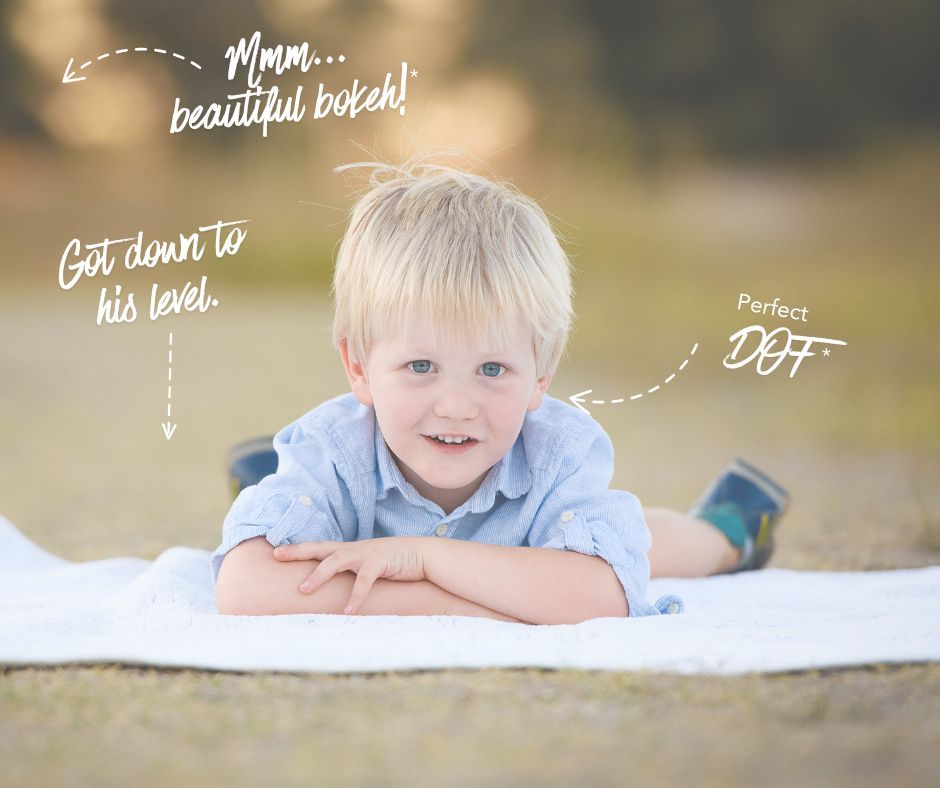
There are plenty of ways to spice up a family portrait session. I've learnt in my years of photographing children that standing and posing for photos can sometimes be tiresome. Getting your clients to lay on a blanket, apart from giving them something to do that is outside the box, allows you, the photographer, to take photos from an alternative angle. Of course, it requires a certain amount of nimbleness but I'm always up for the challenge. And that is because I know it can give you great shots! So mix up your point of view. Take images from above (being sure to do that safely). Or from below (fun). Maybe even, upside down? - not sure about that one... but you get the idea. Don't always stand your subjects in a group, a metre from the background. Which brings me to my next tip...
DoF (or Depth of Field) and the Bokeh it creates (out of focus parts of the image)
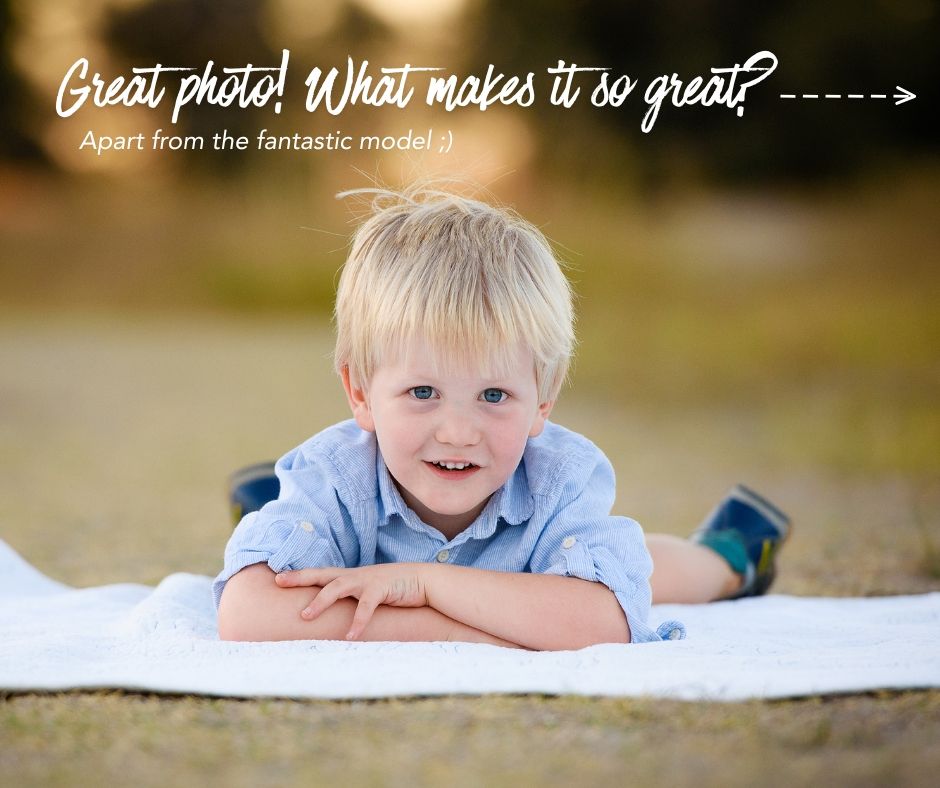
Depth of field refers to how much of the image that's in focus. With a digital SLR, that will depend on a number of factors. What you see in this image is a shallow depth of field. The focus is on the important elements of the image. To achieve this, the best tip I can give you is to have your subject a fair distance from the background. It creates a beautiful Bokeh. [Two variations of its pronunciation: BO (as in bone) kay or BO k uh.]
Bokeh is the beautiful buttery soft texture in the background that is out of focus. Mmmm.. bokeh... sorry. Got a little carried away there.
With a mobile phone you can achieve this with your portrait setting. Check it out if you haven't already experimented with your phone camera settings ;)
With a DSLR, you achieve this with the distance of your subject from the background, and your choice of aperture. Not going to lie... Aperture took me a while to get my head around when I first started.
So... The larger the aperture (the more light entering the lens), the less that is in focus. So an aperture of f2.8 will have a beautiful bokeh background and an aperture of f16 will have more of your image in focus. Which is ideal for things like real estate photography.
In the image above, I used my lens with the longest focal length (200mm) and an aperture of f4. I wanted the subjects whole face (not just a portion of it) and hands in focus. This becomes even more critical if the subject was not looking directly at the camera. You don't want just one eye in focus.
As the photographer, your distance from the subject and the focal length you choose, will also determine the best aperture. Closer distances (you to subject) and longer focal lengths create a shallower DoF with a wider aperture (lower f-numbers) for blur, while smaller apertures (higher f-numbers) increase DoF for sharpness across the scene. It's a real balance. And if you're new to this, I understand your confusion!
So, in short...
The things that make it pop:
- Point of view
- Distance of subject from background
- My distance to the subject
- The focal length of the lens
- The aperture (which determines the speed and ISO for correct exposure)
There a few other things in play of course. The subjects compliance to lay down, the colours present in the background (though not so critical and sometimes a pleasant surprise) and the neutral coloured blanket under my client (to avoid green grass reflections on his face)... but that's another story... I'll do a post about that when I can.
